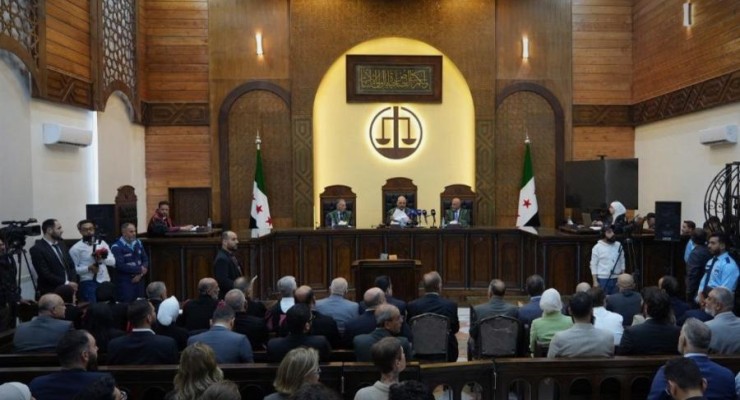
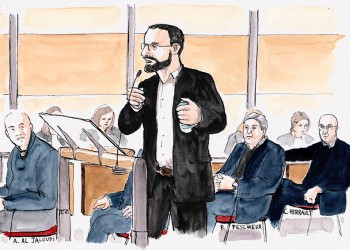
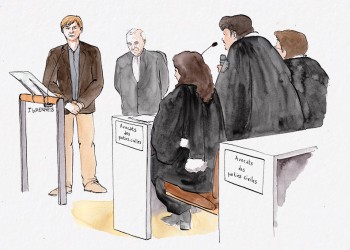
In contrast to the first session – which was marked by chaos and described by many as a “show trial,” due to the chants against the Assad regime by victims’ families and the presence of a large number of social media influencers – the second session was characterized by a clear degree of discipline and composure. This shift reflected the court’s effort to regulate the proceedings within the framework set by the Syrian Code of Criminal Procedure, thereby strengthening the guarantees of a fair trial. At the beginning, the presiding judge read out the indictment. It included legal categorizations such as crimes against humanity, war crimes, and grave violations of the Geneva Conventions. These classifications are significant, as they effectively preclude defenses based on statutes of limitations or the application of prior amnesty laws. This marks an unprecedented development before Syrian courts. Syrian criminal law does not currently contain provisions defining international crimes or their corresponding penalties. Meanwhile, the draft transitional justice law – which would criminalize such acts – is still pending approval by the People’s Assembly. The Assembly itself is still awaiting the list of members to be appointed by the transitional President, Mr. Ahmad Al Sharaa, so it can be fully constituted and convene to pass legislation. Perhaps the most contentious issue among Syrian legal and human rights circles is the fact that these trials have begun in the absence of a clearly enacted legal framework. Here, the judiciary's task becomes more difficult. On the one hand, the popular pressure and the victims’ pain and need to see perpetrators held accountable are understandable and should be respected. On the other hand, these initial trials will lay the groundwork for a long process of accountability that must be built on strong legal foundations that do not compromise any victims’ rights and protections. The most pressing and complex question remains: once the new transitional justice law is adopted, will it be applied retroactively to trials that began before its enactment? Or will the proceedings continue under existing Syrian law, which provides for the death penalty in cases of premeditated murder if proven? In addition to these broader questions, the proceedings were not without well-founded criticism from lawyers and legal experts, particularly regarding the legal classification in the indictment. One of the main objections is that charges of war crimes cannot be applied to events in early 2011, since the situation in Syria was not classified as a non-international armed conflict until July of that year. Some also criticized the omission of serious crimes such as enforced disappearance and persecution as crimes against humanity. In contrast to these critiques, others argue that the indictment merely reflects the view of the referring judge and does not bind the court in any way. What ultimately matters, they contend, is the course of the trial itself and the final judgment, which will reflect the court’s own assessment and legal reasoning. Whether one sides with the critics or the defenders, it must be said that the presiding judge demonstrated firm control over the session and a thorough command of the case file, as reflected in his professionalism and in the nature of the questions directed to the defendant during the interrogation. This questioning was set to continue at the next hearing on 19 May. Another striking irony in this trial is that the presiding judge, Fakhr al-Din al-Aryan, is himself a defector from the Assad regime. The regime had previously issued death sentences against him in absentia and confiscated his assets. It is also worth noting that the Ministry of Justice extended invitations to several civil society organizations to send representatives to attend the trial sessions. This is a noteworthy and commendable precedent, as it signals recognition of the role of civil society in monitoring judicial proceedings. |