Letter from Damascus #5
Open Browser

Letter from Damascus 

November 2025 | Letter No. 5

Dear readers,


After spending twelve years in exile, human rights lawyer and ECCHR Senior Legal Advisor Joumana Seif returned to Syria. In her fifth letter, she describes her appointment to the new Syrian Transitional Justice Commission and the challenges that come with it. She reports on the commission's initial meetings, her responsibilities within the Truth-Finding Committee, and an educational trip to Rwanda, where she gained valuable insights into the country's transitional justice process following the genocide. This letter offers insights into the political tensions, practical hurdles and cautious hopes that accompany this process.


The ECCHR team

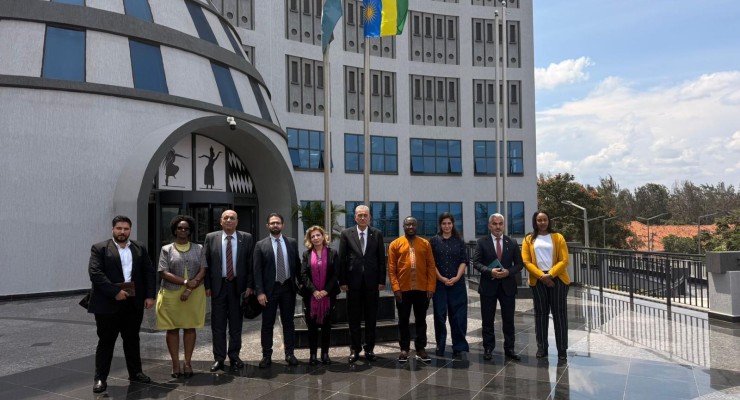
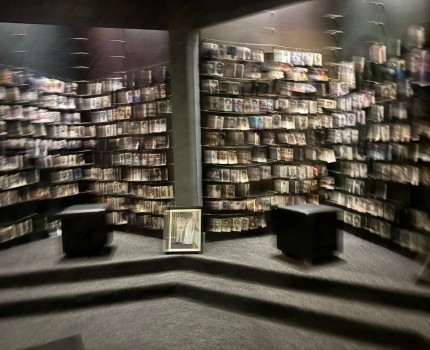
Visit to the Kigali Genocide Memorial, which commemorates the genocide that took place in Rwanda in 1994. Its mass graves contain the remains of around 250,000 murdered individuals. © Joumana Seif

Written in Damascus in November 2025

Since my last letter on 29 August, many developments have taken place in my professional life. Only a few hours after sending the final draft to my colleagues at the ECCHR for publication, Decree No. (149) was announced, naming the members of the Transitional Justice Commission – 13 in total, including myself.


I was not officially notified of this decision. Instead, I learned of it through a flood of congratulatory messages from Syrian friends and colleagues both inside and outside Syria. I could not hide my unease in front of the friends who happened by chance to be visiting me at home. What increased my confusion even more so was that my own friends were divided – some encouraging, others surprised that I might accept such a difficult responsibility given the current circumstances in the country.

An uneasy decision

That night, I couldn’t sleep until dawn, and even then, only for a few hours. Despite spending the following day thinking deeply, I could not make up my mind until I visited my father in the evening to discuss the matter with him. His opinion was firm and convincing: The recovery of our devastated Syria is the responsibility of all of us. It is not appropriate – at least morally – to avoid responsibility out of fear or hesitation before even trying, and before sincerely doing everything possible to contribute to rebuilding, each from their own position and expertise. On my way home, I made a promise to myself to remain positive and to work diligently toward the success of the Transitional Justice Commission’s efforts.


The National Commission for Transitional Justice held its first meeting on 3 September 2025. I was assigned to head the Truth-seeking Committee, one of six committees: Accountability, Reparation, Memorialization, Civil Peace, and Institutional Reform. Since that date, the Commission has met regularly to discuss strategies, needs, and to develop an overall framework. It has also participated in numerous workshops with Syrian civil society and international organizations, both inside and outside Syria.

Transitional Justice in Syria – and Rwanda

Among the most notable external activities the Commission carried out in October was an educational visit to Rwanda, supported by the State of Qatar. I was invited to participate with two colleagues from the Accountability and Civil Peace Committees, in addition to the Chair and Vice-Chair of the Commission. The purpose of the visit was to gain practical insight into Rwanda’s experience with transitional justice: dealing with the issues of missing persons, institutional coordination, community engagement, preserving memory, and preventing recurrence of hostilities.


Undoubtedly, Rwanda’s experience is inspiring and full of lessons. Although there are many differences between the two countries in terms of the causes of conflict and their histories, there are also similarities – especially regarding the numbers of missing persons, mass graves, and the vast number of perpetrators involved in crimes.


The visit lasted four days and followed an intensive program in the capital, Kigali. We met with the Rwandan Minister of Justice, the Deputy Minister of National Unity and Civic Engagement, and many officials from state institutions associated with forensic medicine and advanced laboratories. We also visited memorial museums and “reconciliation villages,” where victims and reintegrated former perpetrators live side by side after serving their sentences.


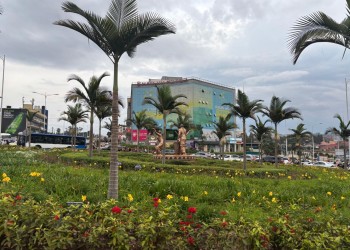
Kigali is a charming, green and clean city. Everyone abides traffic laws, despite the enormous number of motorcycles used as a primary means of transport. For someone like me, coming from chaotic Damascus, it was reasonable to admire the city and its people, and to dream of seeing my city reach Kigali’s level of progress as soon as possible.

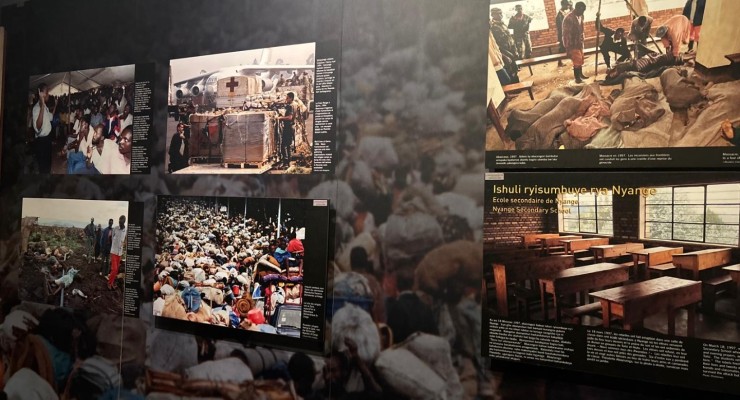
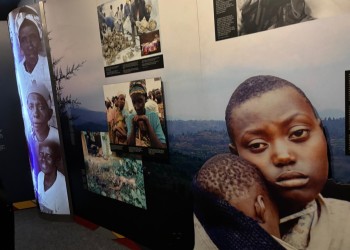
Exhibition at the Kigali Genocide Memorial © Joumana Seif

Impressions from charming and green Kigali © Joumana Seif

A unified national narrative?

What interested me the most during the meetings was the unified national narrative. From the highest official to any of the victims we met, everyone told the same story – about the circumstances that led to the genocide, what happened, and how the country dealt with its catastrophic aftermath.


This unified narrative highlighted the importance of political will. Officials stressed that peacebuilding is a political decision made by the highest authority in the country: “Credit goes to the top leadership for making peace.” The peace process began with a national dialogue that lasted a full year, involving all segments of society, and concluded with clear, binding decisions for everyone.


One particularly fascinating experience was “Umuganda,” which literally means “coming together for a common purpose.” It is a community service day in Rwanda held on the morning of the last Saturday of each month for voluntary social work. On this day, citizens engage in activities such as cleaning neighborhoods, planting trees, repairing roads and infrastructure, or building homes for vulnerable groups. Although Umuganda is portrayed as voluntary – even the president and his family participate – it is in reality largely mandatory, with fines or penalties for able-bodied citizens (typically aged 18 – 65) who do not participate. During this time, many regular services are suspended, and transport within cities halts significantly.


Another noteworthy point in the Rwandan narrative was the emphasis on the “negative role of the media” in inciting genocide. This particularly resonated with my growing concern about the increasing hate speech and incitement among Syrians on social media. Rwanda’s case clearly demonstrates the power of media and propaganda in fueling hatred and violence. The regime in power at the time – dominated by the Hutu ethnic group – used massive propaganda campaigns before and during the 1994 genocide to incite citizens to hate and kill the Tutsi population.


One of the most valuable lessons from Rwanda is the government’s intense focus on spreading a “culture of peace” within society – not only through school curricula and student education programs, but also through teaching parents and grandparents. A parliamentary study conducted eleven years after the massacres revealed that the culture of hatred and revenge was still being passed down to children through stories and anecdotes.

Building a justice system for peace

Perhaps the most impressive part of the visit was the detailed presentation by the Minister of Justice about Rwanda’s legal situation, the collapse of its judiciary after the genocide, the reasons behind establishing the Gacaca courts, and the subsequent steps toward rebuilding the legal system and reforming laws.


My colleagues and I were astonished to learn that, following the genocide, there was not a single judge left in Rwanda, and that only 37 lawyers and legal professionals in total had survived and remained in the country.


These minister’s words particularly stayed with me: “The rule of law is the key. There must be no discrimination in applying it. Justice is the shortest path to civil peace. We develop laws in response to realities. All of Rwanda’s transitional processes happened simultaneously, and we continue to work and improve.”


Indeed, a four-day visit organized by a state institution is not enough to capture the full image; for that, I would have needed to meet with more actors, from civil society or the opposition, for instance. This has pushed me to investigate further after arriving in Damascus, and I actually did find other narratives that contradict the one I received during my official trip. Still, this visit to Rwanda filled me with great enthusiasm and hope. If a country that lost nearly one million people in one hundred days could survive, achieve peace and development, and become one of Africa’s leading economic powers, then surely Syria – with its wealth of human resources – will also recover and flourish. If only there is the political will to build a unifying national identity and adequate support for reconstruction and institutional rebuilding.


With warm wishes,

Joumana Seif


P.S. If you like the Letter from Damascus, please feel free to forward it. If you have received it as a forward, you can easily subscribe via this link. A collection of my previous letters can also be found in our Living Open Archive. 

Fight for justice in Syria

The fight for human rights requires perseverance and persistence. We will accompany and support the Syrian civil society on the road to justice.

Donate now

Updates from ECCHR's Syria work

The starvation siege of Yarmouk on trial

On Wednesday, 19 November, the Higher Regional Court in Koblenz opened a new trial addressing crimes committed under the Assad regime in Syria. For the first time, the starvation and siege of Yarmouk, a former Palestinian refugee camp in Damascus, is examined in court. The five defendants must stand trial for war crimes and crimes against humanity.


Eleven months after the fall of the Assad regime, the Yarmouk case serves as an important contribution to the Syrian transitional justice process. “The experiences in Yarmouk reveal alarming parallels to the present: in Gaza, humanitarian aid structures were also deliberately destroyed, supply routes cut off, and civilians endangered by the deprivation of essential resources. Using hunger as a weapon – whether in Yarmouk or Gaza – is a war crime,” says ECCHR’s Andreas Schüller.


More on the case.

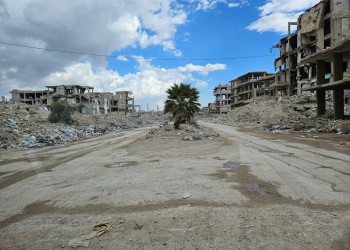
Yarmouk remains buried under the rubble © Andreas Schüller

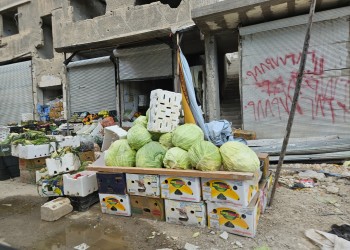
Even here, however, people are returning and taking the rebuilding into their own hands © Andreas Schüller

Lafarge on trial: Syrian employees' voices heard after nine years

They have waited nearly a decade. Now, Lafarge's former Syrian employees are finally getting their chance in court: since 4 November, the French cement giant and several former executives face charges in Paris for financing terrorism and violating international sanctions. This is a historic moment – the first case of its kind against a multinational corporation.


While war raged in Syria, Lafarge allegedly paid over 5 million euros to armed groups – including the Islamic State. Not to protect its employees, but to keep the cement plant running. The people who worked there faced kidnappings and death threats. Due to a procedural irregularity, the trial was postponed and will now continue until 19 December 2025.


More about the case and our Q&A

No deportations to Syria

“It has been less than a year since the fall of the Assad regime, and already the ruling conservative party, CDU, is calling for the deportation of refugees from Germany to Syria. The country still lies in the rubble of war, and its future remains uncertain. As long as Syria is not safe, these proposals are above all one thing: unlawful, racist ideas,“ says ECCHR's Ruham Hawash in response to the CDU’s deportation fantasies. One year after the fall of the Assad regime, reconstruction is only just beginning – people continue to live under difficult and insecure conditions. As ECCHR we’re fighting against deportations and for the freedom of movement – against the authoritarian overhaul of the legal system.

Justice for Syria by Syrians – How the EU can help

As the fall of Assad regime has reignited hopes for justice and a democratic transition in Syria, criminal accountability remains a key demand of survivors and civil society: it is seen as foundational to any process of justice and reconciliation, as well as the long-term stability of the country. The EU has a pivotal role to play here: its track record of universal jurisdiction cases on Syrian state crimes provides a roadmap for tackling impunity abroad. ECCHR’s latest policy paper calls upon the EU to renew its long-standing political commitment to accountability in Syria, while emphasizing that this must be a process led by Syrian experts and civil society. 


Read the policy brief: “Promoting criminal accountability and transitional justice in Syria: The role of the EU” (also available in Arabic)

Let's stay in touch!

+49 (0)30 69506023          newsletter@ecchr.eu

ECCHR

EUROPEAN CENTER FOR CONSTITUTIONAL AND HUMAN RIGHTS
Zossener Straße 55 – 58
D – 10961 Berlin

+ 49 30 400 485 90
info@ecchr.eu

If you no longer wish to receive this email, you can unsubscribe here. 

bluesky facebook instagram linkedin youtube

Bank details
Name: ECCHR
Bank: Berliner Volksbank
IBAN: DE77 100 90000 885360 7011
BIC: BEVODEBB

Further information on data protection and imprint.