Letter from Damascus #6
Open Browser

Letter from Damascus 

December 2025 | Letter No. 6

Dear readers,


Today marks the first anniversary of the fall of the brutal Assad regime. It is also nearly one year since human rights lawyer and ECCHR Senior Legal Advisor Joumana Seif returned to Syria after spending twelve years in exile. In her sixth letter from Damascus, she reflects on the celebrations marking the day Syrians freed themselves from the regime and its system of torture, prisons, and death. Feelings of joy and hope for the future of a liberated Syria stand side by side with exhaustion and anger over the ongoing violence and killings. With 8 December 2024, a long-locked door swung open: Perpetrators fled, survivors returned and mass graves were opened. What does this mean for legal accountability?


The ECCHR team

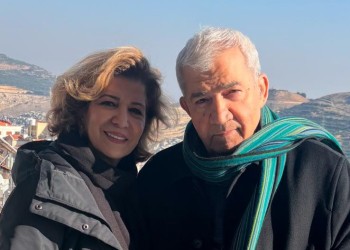
Joumana Seif and her father Riad on their first visit in Damascus after the fall of the regime in December 2024. © Joumana Seif

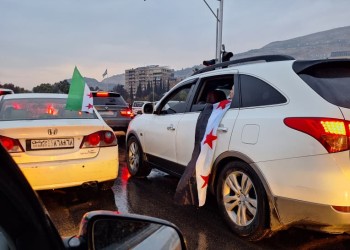
Celebrations with revolution's flags for the anniversary of the fall of the regime. © Joumana Seif

Written in Damascus in December 2025

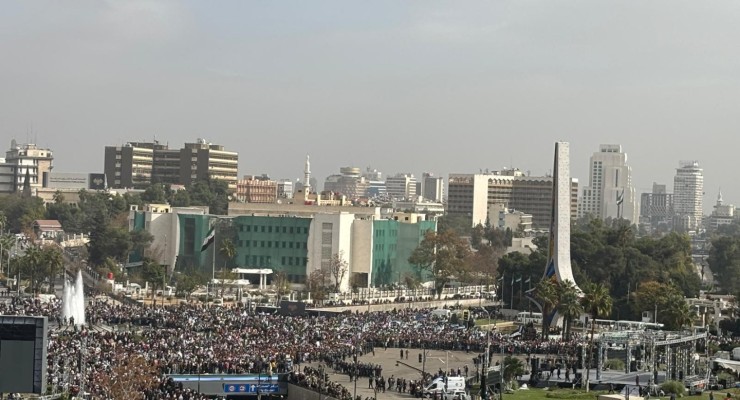
We started in Damascus to notice the signs of preparations for the December 8 celebrations right from the beginning of the month. Along with receiving many invitations to various events - both official and from civil society - street vendors selling the revolution’s flag reappeared, especially in large numbers at Umayyad Square, which had been a gathering place for Syrians’ celebrations for many months after December 8.


There is no doubt that Assad’s fall is a momentous, exceptional event. It came suddenly and shattered all the initiatives that had been calling for political “realism,” for accepting Assad once again in the international community, and normalizing relations with him. For me, it is the most important event in Syria’s modern history.


I will never forget how I felt when my son Khaled woke me early on the morning of December 8 saying: “Wake up, Mama, the regime has fallen.” I embraced him and wept bitterly. I don’t remember ever crying that way in my entire life, despite all the hardships and pain I had endured personally—from the disappearance of my younger brother, to my father’s long imprisonment and his illness while in jail, to persecution, security pressures, and threats. Perhaps that crying was my soul’s attempt to release all the accumulated anguish and pain of many years.


Yes, I will celebrate this day and allow myself joy - if I am able - despite the exhaustion, pain, and anger over what happened in Syria this year: massacres, division, and hateful rhetoric. I had hoped that one year after the fall of the regime, I would be certain that we were truly on the right path toward citizenship, the rule of law, and civil peace. I had hoped that killing, violence, and the kidnapping of women would have ended in Syria forever with the fall of Assad’s regime. The nature of the violence has changed, but it has not disappeared. There are still armed clashes along the coastal area and in Suweida, while the future of the Kurdish-dominated north remains politically uncertain.


At a small dinner hosted by the ambassador of an Arab country, gathering a few civil society actors in Damascus, the ambassador, after listening to everyone, said: “Don’t you Syrians notice that you are demanding and always seeking perfection and flawlessness, which makes you unable to see achievements and enjoy them? Look at how much pressure you place on your children to excel, even if that pressure makes you harsh toward them and toward yourselves.”


“Yes, that’s true,” I replied. As he spoke, my memory leapt far back to the days of my children’s childhood - to my strictness with them and my intolerance regarding excellence and schoolwork. I was harsh with them - and with myself. And today, even after many years, my three children never miss a chance to laugh, tease, and reproach me about how strict I used to be.


What the ambassador hinted at may be true: striving for perfection can obscure the progress made on the ground - or at least blur it - especially when combined with the critical thinking one acquires after many years of work in a human rights organization like the European Center for Constitutional and Human Rights.


Ultimately, and without a doubt, people like me in civil society are emotionally exhausted. We are caught in a constant cycle of rising hope and deep disappointment, because we want the best - and the very best - for our country. And of course, we are working and will continue to work tirelessly for a better future for Syria and all Syrians.


Despite the division among Syrians over what to call December 8 - some insist on calling it “Liberation Day,” while others insist on “The Day the Regime Fell” - I will celebrate it. I will celebrate it regardless of the name, because it is:

  • the day prisoners were freed from the regime’s jails;
  • the day millions of Syrians were freed from Russian bombardment and the threat of chemical attacks;
  • the day civil society was liberated, and so were speech and opinion.

And I will celebrate it because we rid ourselves of Assad’s regime, because it is impossible to imagine a regime more harmful to Syrians. A regime of prisons, death under torture, chemical attacks, barrel bombs, mass graves, corruption, extortion, and every type of horrific crime imaginable.


I will celebrate, knowing that our path ahead is still very long and very difficult. Yes, I will celebrate my return to my family, my friends, and my home. I will celebrate what I managed to accomplish this year: founding the Riyad Seif Foundation for Human Rights and the legal trainings it provides; and I will celebrate the reopening of the Democratic Dialogue Forum and the thoughtful, respectful conversations Syrians are engaging in with one another.


Thank you for your support along the way,

Joumana Seif


P.S. If you like the Letter from Damascus, please feel free to forward it. If you have received it as a forward, you can easily subscribe via this link. A collection of my previous letters can also be found in our Living Open Archive. 

Fight for justice in Syria

The fight for human rights requires perseverance and persistence. We will accompany and support the Syrian civil society on the road to justice.

Donate now

ECCHR's Syria work after Assad

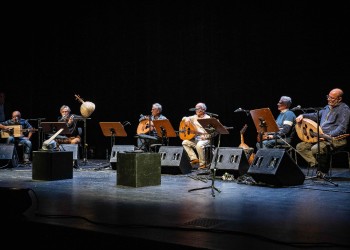
A little over a year ago, on a Wednesday evening in late November 2024, a remarkable group came together at Berlin’s HAU Theatre: former political prisoners from Syria who were performing a concert together for the first time in decades. Thirty years earlier, they had formed a music group in the cells of Syria’s most infamous prison, the Sednaya prison, to counter the oppressive soundscape around them — using improvised instruments made from leftover food, threads from their clothing, and other materials from everyday prison life. At the very moment of their performance, thousands of kilometers away, the HTS militia launched its offensive on Aleppo. No one at the HAU could have imagined that it would take only eleven days for Assad to fall and Sednaya to be liberated. The sudden end of what had felt like an eternity.


With 8 December, a long-locked door swung open. Perpetrators fled, losing the protective power structures they had relied on. Survivors returned. For legal accountability, this means that many responsible individuals have become more reachable, even if some have sought protection from Russia or other states. Prisons, mass graves, crime scenes, and archives are now accessible. But who is responsible for safeguarding them? How can they – and other evidence – serve the victims of mass violence? Who supports them in uncovering the fate of their missing loved ones? Much that once seemed unthinkable – especially regarding legal accountability for the thousands of crimes committed since 2011 – has now become possible. And yet, much remains uncertain.

HAU Berlin, November 2024: Performing songs from Sednaya Prison in Syria © UMAM/MENA Prison Forum

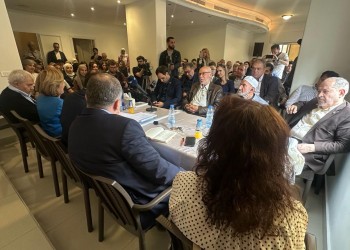
The opening of the Democratic Dialogue Forum in Damascus in summer 2025. © Joumana Seif

As ECCHR, we supported our colleague Joumana Seif in returning to Damascus in December 2024 to reopen her former offices and to found the Riad Seif Human Rights Foundation. With the Foundation, she has begun reviving the Forum for Democratic Dialogue – originally established in 2001 and brutally shut down — as a space for inclusive, multi-religious, and multi-ethnic political dialogue in the heart of Damascus. With support from ECCHR colleague Ruham Hawash, the Foundation’s Human Rights Center has begun training young lawyers and activists in human rights work.


Meanwhile in Europe, cases under the principle of universal jurisdiction continue unabated – and now that perpetrators and additional evidence are more accessible, the number of cases is likely to grow significantly. After a three-year trial, Syrian doctor Alaa M. was sentenced in Frankfurt in June 2025 to life imprisonment for torture, sexual assault, and killing. In Koblenz and Stockholm, the Yarmouk trials recently began. These cases address not only torture and detention, but also the siege and starvation of an entire population in the predominantly Palestinian Damascus district of Yarmouk. The French judiciary has meanwhile issued more than twenty arrest warrants against high-ranking Syrian war criminals, including Assad himself. In November, the historic trial in Paris opened against the transnational corporation Lafarge and its leadership: at its center is the company’s financing of ISIS in Syria in order to keep its cement plant there operating.


Since 2012, ECCHR has been working intensively on accountability for international crimes in Syria. From the start, our approach has been to use transnational proceedings – under universal jurisdiction or against European companies – to create avenues for Syrian partners, victims’ organizations, and survivors themselves to assert their rights. The legal progress achieved through these efforts is intended to lay the groundwork for ensuring that such systematically organized proceedings can one day take place in Syria itself.


This opportunity emerged unexpectedly and suddenly a year ago. It was therefore a significant moment for us to welcome the Syrian National Commission for Transitional Justice to ECCHR in November. The discussions focused on what would be needed to conduct proceedings within Syria, how investigative findings from universal-jurisdiction cases could be incorporated, and how Syrian society could gain access to ongoing trials in European countries.


Much is still in its early stages. Since the fall of the regime, further acts of violence have been committed in Syria – whether in the coastal region or in Suwaida. And yet, since 8 December, the door has remained open to shaping comprehensive, sustainable, and effective legal accountability for the mass crimes committed by the Syrian regime and other actors.


One year after Assad's fall might have been a moment for relief, a pause to congratulate the Syrians among us on having survived tyranny. Instead, the federal government is openly discussing how to get rid of many who have long since become part of our communities: people who have found work after years of struggle, whose children go to school here, who can finally breathe again. Many Syrians in Germany feel stripped of agency and unsettled by this discourse, wondering whether, and for how long, they will be allowed to stay. There is scarcely any talk of rebuilding Syria, of safe pathways for temporary return. Instead, the interior minister conjures a caricature of a supposedly criminal collective that must now be sent back. What a damning indictment, not of the refugees, but of those who speak this way. This is a discourse of repressive destabilization rather than democratic encouragement. Yet the latter is precisely what this moment demands, one year after the regime's collapse.

Let's stay in touch!

+49 (0)30 69506023          newsletter@ecchr.eu

ECCHR

EUROPEAN CENTER FOR CONSTITUTIONAL AND HUMAN RIGHTS
Zossener Straße 55 – 58
D – 10961 Berlin

+ 49 30 400 485 90
info@ecchr.eu

If you no longer wish to receive this email, you can unsubscribe here. 

bluesky facebook instagram linkedin youtube

Bank details
Name: ECCHR
Bank: Berliner Volksbank
IBAN: DE77 100 90000 885360 7011
BIC: BEVODEBB

Further information on data protection and imprint.