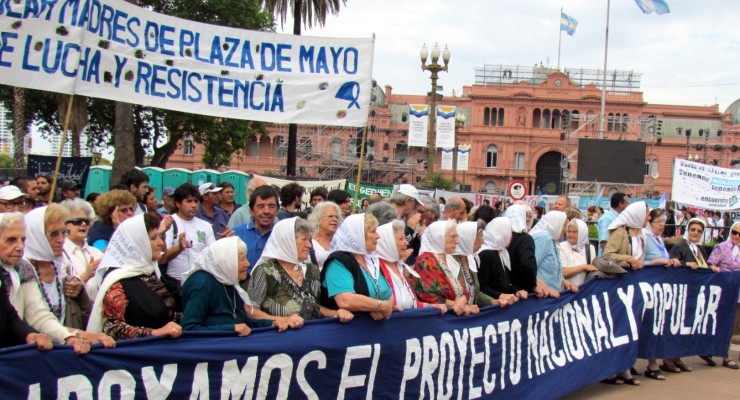
Often linked to other grave crimes, such as torture, murder or sexual violence, enforced disappearance must also be seen as uniquely horrendous in its own right. The whereabouts of victims – and whether they are alive – can remain a question mark for years, if not decades. In Argentina, approximately 30,000 people were forcibly disappeared during the Videla dictatorship (1976 – 1983), and to this day, the fate of many is unknown. It is estimated that 300 people, kidnapped as children and deprived of their identities, have yet to be found and reunited with their families – a crime that continues to be committed more than 40 years on. Enforced disappearance is also devastating at the community level. It not only serves to smother dissent and terrorize oppositional voices; the disappeared tend to be the primary breadwinners in families. The abduction en masse of parents, able-bodied workers and those politically inclined sabotages the health of communities into the next generation. As the reckoning with these crimes continues in Argentina, the Milei government is now attempting both to suppress and legitimize this brutal history of dictatorship. This shows how far-right regimes often launch reactionary agendas by dismantling taboos against the evils of the past – something also clearly visible in the politics of the far-right in Germany today. Last year, though, Germany’s international legal reforms, to which ECCHR also contributed, removed major hurdles to establishing proof of the crime of enforced disappearance. Relatives are no longer required to have made official inquiries with authorities, who are often themselves the perpetrators. Without this obstruction, prosecutors should be more inclined to prosecute this crime.
Read our statements here and here (only available in German)
|