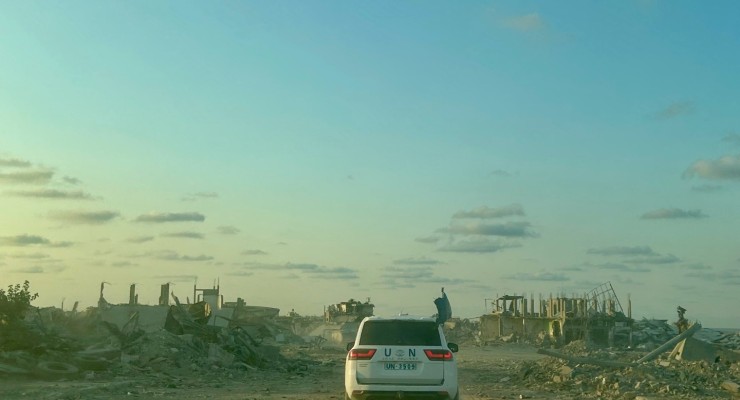
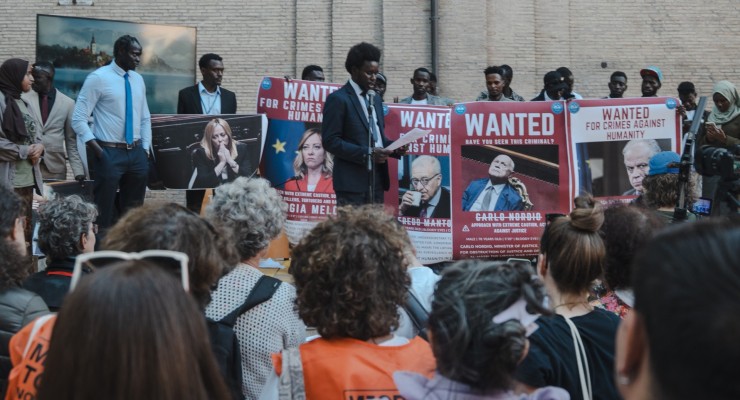
After two years of war, the current ceasefire in Gaza is not a roadmap to peace. It ends the destruction, but not its political logic. For the first time in months, people can once again gain access to water, food and medical aid. Hostages have been released, Palestinian prisoners freed – a vital respite, but not a future. In Europe and all over the world, pro-Gaza protests have shaken the public sphere. They grew out of migrant, postcolonial and diasporic milieus, driven by young people who no longer accepted the moral paralysis in politics. Their voices were indignant and defiant – a challenge to those in power, whose response came mostly in the form of rejection, denial and intimidation. Israeli historian Omer Bartov said at an ECCHR event on the eve of the current ceasefire agreement: “The current and previous US presidents could have ended this terrible recent war in Gaza – unlike Putin's war in Ukraine – within two days.” The long wait was thus not the result of impotence, but a conscious political decision – a symptom of a globally selective coldness towards Palestinian victims, particularly in Germany. German compassion adheres to exclusionary boundaries, not universal standards. After months of devastation, it is clear that a war machine was at work in Gaza, the genocidal nature of which can hardly be further disputed. In contrast, however, German arms deliveries remained unchallenged for a long time – an expression of the double speak that invokes human rights while simultaneously supporting their violation: a case of deeply entangled complicity. With its constitutional complaint against German arms exports to Israel, ECCHR demands that this deadly alliance end, that justice be served, and responsibility be taken. 80 years after the Nuremberg trials, the principle remains the same: without justice, there can be no peace. Without equality, there can be no justice. |