SYRIA – ON THE ROAD TO JUSTICE. GERMANY'S ROLE IN US DRONE ATTACKS. 

DECEMBER 2024 | NEWSLETTER 101

In Syria, what yesterday felt like an unimaginably distant hope of liberation has become a reality almost overnight. Now, a nationwide reckoning with countless regime crimes will hopefully aid in the transition toward a new democratic state in Syria.

This auspicious turn of events provides a sorely needed counterpoint to a year, where the current world order has faced profoundly dark realities of conflict that have shaken it to the core. At the same time, however, public support and mass mobilization behind international law have never been more powerful – calls for international justice are becoming louder. In Germany, a 10-year-old case on Germany’s role in deadly US drone strikes in Yemen will be heard at the country’s highest court. We invite you to read about these topics and more in our final newsletter of 2024.


We at ECCHR thank you for your solidarity and support this year and wish you the best for 2025.


The ECCHR Team

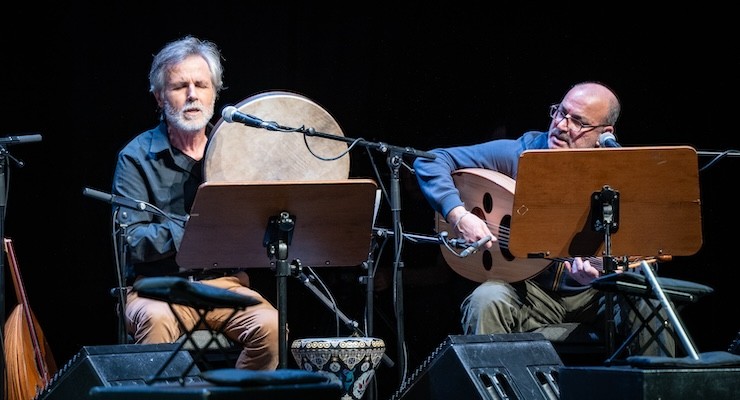
Former political prisoners, who were held in Sednaya prison in Syria, perform a concert in Berlin. 12 days later, the Assad regime falls. © Mena Prison Forum

How the future can begin

by Wolfgang Kaleck, General Secretary


"The eternity is over," says our colleague, the Syrian human rights defender Joumana Seif, on the first day after the collapse of the Assad regime. Seif, who is also the 2023 Anne Klein Prize winner, has been working with us at ECCHR for almost eight years on our largest single project to date: to bring those responsible for the torture regime in Syria to justice. For 54 years, the country has lived under the paralyzing dominion of a family dictatorship. It systematically plundered Syrian society, while petrifying it into a culture of fear. It combined the corruption of former Soviet republics with a chinese-style police surveillance apparatus.


Now, in the aftermath of liberation, the investigation, documentation and legal processing of the state crimes of the Assad regime will have enormous influence on the construction of a future democratic Syria. For the last 13 years, Syrian activists, lawyers and survivors have been working together tirelessly with an international network of civil society organizations – including ECCHR – to make this happen. National criminal justice authorities in third countries have gathered massive quantities of evidence. Pioneering trials under the principle of universal jurisdiction have already taken place, and the United Nations have established two mechanisms specifically tasked with investigating atrocities.


Ultimately, this is about thousands and thousands of disappeared people, systematic torture, undocumented mass graves, and war crimes ranging from the use of poison gas to massacres of the civilian population. But this is also about the chains of command of those responsible, the state torturers, as well as – albeit to a much lesser extent – the self-appointed executioners of various militias. Now, for the first time, it is possible to travel to Syria and gain access to the crime scenes and to most of the perpetrators.


We are already discussing with our Syrian partner organizations how we can support Syrians in initiating a sustainable process for legal accountability and coming to terms with the past. Given the decades of horror, there is no question that this will be a long road. Now is the time to take the first steps in Syria to ensure that questions of justice are in the hands of Syrians themselves. But we will of course also continue to pursue our cases with German, French, Norwegian, Swedish and Austrian prosecution authorities. And depending on the course of developments in Syria and in consultation with Syrian human rights activists, we will become active in other forums.


As Joumana Seif put it: "Now we want to see what we have been fighting for all these years: a democratic country with equal citizenship for all, where people's rights, their dignity and their civil rights are protected. That is the dream we will continue to fight for." With your help, we will work to make this a reality.


More on our work on Syria

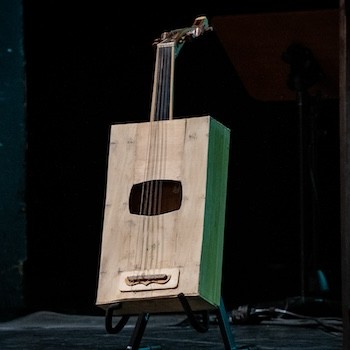
An instrument of hope, cobbled together from found materials in the Syrian prison. © Mena Prison Forum

A just world for everyone is possible

But there is still a long way to go, and our work is more urgent than ever. Every donation – large or small – brings us closer to our goal of creating a world where justice prevails and solidarity knows no limitations.

Donate now

INTERNATIONAL CRIMES AND ACCOUNTABILITY

Highest court assesses Germany’s role in US drone attacks in Yemen

One cannot usually foresee the path that a legal intervention will take. But sometimes, a case launched long ago can suddenly resurface from a “procedural purgatory” with a resounding legal and political significance. The case on Ramstein, initially filed at the Cologne Administrative Court in 2014 by three Yemeni survivors and supported by ECCHR and Reprieve, is now being heard before Germany’s highest court. For many years, the US drone program has been using the military base in Ramstein, Germany, as an operational hub for conducting strikes against Yemen that violate international law – making Germany potentially complicit in these violations. The Federal Constitutional Court is now in a position to establish groundbreaking principles concerning Germany's responsibility towards civilians abroad – in all conflicts where Germany is involved. One key question is: Under what conditions can affected people from abroad sue for the protection of their right to life in German courts? As Andreas Schüller emphasized in the proceedings: "For many years, we have recognized patterns of threatening attacks that we consider to be in violation of international law. It is primarily the civilian population that suffers from this, and Germany plays a central role in this through very specific administrative actions."


More about the case

Justice for Syrian Kurds

The current situation in Northeastern Syria clearly shows that when impunity reigns, violence and displacement are rampant. Exactly six years ago, Turkey and allied militias of the Syrian National Army (SNA) launched the military operation “Olive Branch,” bombarding the Afrin region. The militias’ system of arbitrary rule continues to this day, but now, in recent days, the SNA has displaced more than 100,000 people of primarily Kurdish dissent.
The crimes against civilians and the systematic expulsion of the predominantly Kurdish population have thus far not been investigated. Therefore, in January, we filed a complaint with the German Federal Public Prosecutor. Now, together with our partners from Syrians for Truth and Justice, we have submitted a brief to the UN body responsible for investigating crimes committed in the Syrian Arab Republic since March 2011, the International, Impartial and Independent Mechanism. Our aim is to end impunity and bring the crimes of the militias to justice.


More about the case

Read our dossier “Justice for Afrin”

Cracking down on wars of aggression

The Russian war of aggression against Ukraine still serves as a painful reminder that reform is urgently necessary when it comes to the crime of aggression. The jurisdiction of the International Criminal Court (ICC) over this crime is significantly more restricted than with the other core crimes against international law – namely genocide, crimes against humanity and war crimes. We believe this has to change. If the court is able to prosecute the crime of aggression under the same conditions as the other core crimes, this would ensure that more states fall under the ICC’s jurisdiction and that crimes of aggression can be prosecuted more effectively. ECCHR hosted a side event at this year’s 23rd Assembly of States Parties to the ICC in The Hague, with the aim of identifying ways to reform the ICC’s jurisdiction. We also jointly published a statement with other civil society organizations, calling on all states parties to advocate for this long-overdue reform.


Read the statement

Advocating for stronger universal jurisdiction laws in Europe

There is much more that can be done to ensure that European states jointly investigate and prosecute international crimes, such as genocide, war crimes and crimes against humanity. As part of the Global Initiative Against Impunity, we are in dialogue with the judiciary, ministries, academia and civil society in Denmark – which also just adopted its new universal jurisdiction law on 17 December – and Poland to support reform projects and enhance efforts to prosecute international crimes. In our recently published policy brief, we also call on the EU to provide stronger and more sustainable support for international criminal justice in the fight against impunity. 


Read the policy brief

Watch video “What is Universal Jurisdiction?”

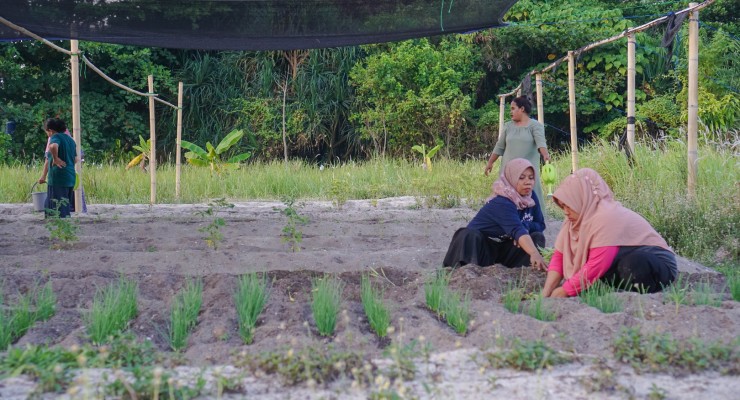
The Indonesian island of Pari is acutely endangered by the climate crisis. The local population knows from experience just how closely food security and biodiversity are linked. © ECCHR

BUSINESS AND HUMAN RIGHTS

Biodiversity needs human rights –                  And vice versa

Every two years, the UN Biodiversity Conference (CBD) convenes to assess the state of the world’s ecosystems, whose rapid deterioration in recent decades threatens all living beings on the planet. ECCHR’s Theresa Mockel joined multiple sessions on the role of human and indigenous rights in efforts to protect biodiversity, while coordinating with partners from Latin America and beyond. Historically, conservationist and human rights movements have not always been able to align their agendas, in part due to conservationist calls for nature to be cordoned off from human activity and kept “pristine.” While dismissing the crucial work of indigenous and local communities as stewards of endangered ecosystems, such an approach also threatens to restrict their traditional practices and livelihoods – or even evict them from their lands. These days, top-down government or corporate-led conservation efforts are increasingly seen not only as less effective, but even harmful – i.e. with schemes like “biodiversity offsetting” that sacrifice one ecosystem and then “compensate” for it somewhere else. Our takeaway from this year’s CBD: protecting global biodiversity, as well as mitigating climate change, require the safeguarding of human rights and the strengthening of indigenous-led conservation work.

Taming and civilizing the market

On 1 January, the German Supply Chain Act will be two years old – you could also say that it has outlived the current coalition government! The survival of this law should not be taken for granted, given the incessant, disruptive political onslaught recently waged by some of its former supporters for electoral reasons. In order to analyze and take stock of this current situation, we held the event "Two years of the Supply Chain Act". Miriam Saage-Maaß offered concluding words that will continue to guide our work in the coming year: "This law is more than just an international fight against child labor, slavery and inhumane working conditions. It forces us to recognize that the honest merchant is illusory and that the market must be tamed and civilized by rules." Now, all eyes are watching the implementation of the EU supply chain directive. We will also critically monitor this process and, above all, ensure that our partners in the Global South know the law and can apply it. A critical assessment of current questions on supply chain legislation can also be found in our new Q&A.


Read the Q&A

BORDER JUSTICE

When seeking asylum is seen as an act of hostility: Sajjad's story

First, he fled Iraq via Belarus, and then survived a year of unlawful detention in Lithuania – Sajjad Mohammedhasan speaks of his experiences with the New York Review of Books. From inside detention, he single-handedly filed a complaint with the European Court of Human Rights and is now supported by ECCHR and Equal Rights Beyond Borders in his case. 


Read the article

More about the case

INSTITUTE FOR LEGAL INTERVENTION

Alumn* Reunion:

Recalibrating our tools for a shifting political landscape

For over a decade, ECCHR’s Critical Legal Training has fostered co-learning and critical perspectives in human rights legal interventions, thanks to an inspiring network of alumn*. At this year’s Annual Reunion, over 100 former trainees and staff came together to delve into issues such as movement lawyering, border tech, refugee law, and the future of neoliberal globalization. The plenary, led by alumn* Lavinia Parsi and Amira Tamim, examined whether international law furthers oppression in Palestine or if it can be a tool of resistance, with insights from Ahmed Abofoul (Al-Haq), Dr. Nahed Samour (Radboud University), and Chantal Meloni. Altogether, the event underscored how human rights work must now contend with a shifting legal, political and technological landscape. In spite of the current challenges we face, these exchanges among the next generation of human rights defenders inspire renewed hope for long-term change.

Let’s talk about solidarity 

No matter which violent conflict situation we look at – Gaza, Ukraine, Sudan – how can we stand in solidarity with those facing oppression? Who has what role, and who gets to decide on strategy? The kick-off event for this year’s alumn* reunion focused on these questions. Some panel guests have direct personal experience in the respective conflicts, while others are primarily politically motivated. This inevitably results in different perspectives, all of which came together in a fruitful discussion moderated by Hanaa Hakiki and alumn* Colene Arcania. The conversation affirmed how the particular experiences of those affected on the ground must also be understood as forms of expertise in their own right – and be given greater weight in strategic human rights work.

Indigenous lands in Argentina under threat

The 10th of December marks one year since the inauguration of Javier Milei as Argentina’s president. Now, on that same day, Milei recently overturned the country’s Territorial Emergency Law. This law recognized the pre-existence of Argentina’s Indigenous peoples and laid the groundwork to protect them against evictions from their ancestral lands. This comes as a next step in Milei’s agenda of dismantling indigenous rights for the sake of capitalist interests. In their conversation entitled “Beyond Limitations,” artist and activist Tomás Saraceno and human rights lawyer Wolfgang Kaleck discuss the impact of neoliberal politics on indigenous communities and how to counter them with interdisciplinary initiatives.


Read “Beyond Limitations”

Read “special report: milei. year one.” by our partner organization CELS.

© Peter Oliver Wolf

New ECCHR podcast episode!

The new episode "German 'Stattsräson' vs. fundamental rights" of our podcast series “Framing Human Rights” looks at Germany's interpretation of its “reason of state” in the context of Israel's ongoing war crimes in Gaza. What are the political, legal and societal ramifications of this, and what kinds of solidarity alliances are necessary to counter its repressive dimensions? Activist and political scientist Simin Jawabreh and Paula Zimmermann, Legal Advisor for freedom of speech and the right to protest at Amnesty International, joined ECCHR alumn* Amira Tamim in discussion.


Listen to the podcast (only available in German)

ECCHR

ECCHR welcomes new staff and trainees

Lisa-Lou Cornet joined the Institute for Legal Intervention as a trainee

Alice Contini joined the International Crimes and Accountability team as a trainee

PAST EVENTS

Strengthening the principle of universal jurisdiction

On 20 November, Florentina Pircher and Patrick Kroker presented a policy brief in Brussels on the struggle against impunity. In discussions with EU parliamentarians and the relevant staff, key starting points were identified for strengthening the effectiveness of the principle of universal jurisdiction in the coming years – both within and outside the EU.


Read the policy brief

On Justice #1: The promise of international law

At the HAU in Berlin, this event focused on the decisive turning points in the development of international law to date and the lessons they bring for the present and future. The panelists were Andreas Schüller, Kristina Hatas (Amnesty International), Nahed Samour (legal and Islamic scholar) and Matthias Goldmann (legal scholar), moderated by Armaghan Naghipour (Lawyers Without Borders).
This discussion series, which explores the possibilities and limits of law as a civil society instrument for progressive movements and struggles, will be continued in 2025.


More info

Mena Prison Forum

On November 27, the MENA Prison Forum hosted a concert and discussion at Berlin's Hebbel am Ufer. Eight former political prisoners from the Syrian Sednaya military prison performed on stage. Despite the worst violence and torture during their confinement, they built musical instruments from leftover food and other materials to give voice to their resistance. This was the first time in several decades that they performed together on stage. After this moving concert, Joumana Seif, ECCHR Legal Advisor and Syrian human rights activist, discussed the long history of imprisonment, torture and human rights crimes in Syria with Yassin Al Haj Saleh and Lynn Maalouf. That evening, no one would have dared to hope that 12 days later, Assad and the horrors of Sednaya would be history.


More info

LET'S END IMPUNITY FOR HUMAN RIGHTS VIOLATIONS TOGETHER! 

We take decisive action against governments, state actors and companies that violate human rights. We need your support to continue these efforts.

Donate now

PUBLICATIONS

Patrick Kroker / Whitney Nosakhare / Florentina Pircher

Policy Paper: Europe’s Fight Against Impunity for International Crimes

ECCHR, October 2024


Q&A: Two Years into the German Supply Chain Act

ECCHR, November 2024


Sigrun Matthiesen

Lessons forged from the fire

ECCHR, November 2024


ECCHR, FIDH / Frank Bold / OXFAM / anti-slavery / Friends of the Earth Europe / European Coalition for Corporate Justice / Clean Clothes Campaign / CIDSE

Corporate Sustainability Due Diligence Directive: A guide to transposition and implementation for civil society organisations

November 2024


Theresa Mockel

Litigating Corporate Responsibility for Climate-Related Loss and Damage

Völkerrechtsblog, 14 November 2024


Alexander Schwarz

International law – The strength of law (only available in German) 

neues deutschland, 22 November 2024


Joumana Seif

We women must also have a seat at the table to be part of the decision-making (only available in German)

taz, 13 December 2024


Patrick Kroker
Multiple secret service agencies interested in Assad regime files (only available in German)

rbb, 12 December 2024


Annabell Brüggemann

Supply Chain Act: The companies are also partly responsible for the bureaucracy (only available in German)
Zeit Online, 15 December 2024

PODCAST

Chantal Meloni

Mandati d'arresto della CPI per Netanyahu, Gallant e Deif (only in available in Italian)

Radio 3, 22 November 2024 


Alexander Schwarz

Arrest warrant against Netanyahu: International lawyer Dr. Alexander Schwarz on Germany’s dilemma between law and reason of state (only available in German) 

Über Israel und Palästina sprechen, 29 November 2024 

 
Wolfgang Kaleck 

Out of politics and recent history – International humanitarian law (only available in German) 

bpb – APuZ, 4 December 2024 

 
Wolfgang Kaleck

Stopping war criminals (only available in German) 

Politikum – der WDR5 Meinungspodcast, 2 December 2024 

 
Wolfgang Kaleck

Interview: A regime that can hardly be surpassed in cruelty (only available in German) 

Deutschlandfunk, 12 December 2024

VIDEO

Wolfgang Kaleck

German Parliament press conference: Arrest warrant against Netanyahu, Germany’s role and international law (only available in German) 

Jung & Naiv, 29 November 2024

Let's stay in touch!

+49 (0)30 69506023          newsletter@ecchr.eu

ECCHR

EUROPEAN CENTER FOR CONSTITUTIONAL AND HUMAN RIGHTS
Zossener Straße 55 – 58
D – 10961 Berlin

+ 49 30 400 485 90
info@ecchr.eu

If you no longer wish to receive this email, you can unsubscribe here. 

twitter facebook instagram linkedin youtube

Bank details
Name: ECCHR
Bank: Berliner Volksbank
IBAN: DE77 100 90000 885360 7011
BIC: BEVODEBB

Further information on data protection and imprint.