Open Browser

LAFARGE CALLED TO TRIAL. COURT CONDEMNS AUTOMATIC REMOVALS AT GERMAN BORDERS 

NOVEMBER 2024 | NEWSLETTER 100

Today, we release our 100th edition of the ECCHR newsletter, which coincides with a wave of important rulings on several key issues. After the recent introduction of controls on all its borders, Germany’s practice of “automatic removal” of asylum-seekers without due process was ruled unlawful by the European Court of Human Rights. Also, the long-awaited decision to bring multinational cement giant Lafarge to trial for financing armed groups in Syria has finally come to pass. In a crucial step long overdue, German authorities have allowed an Ecuadorian union to access case files and officially join legal proceedings to have their say.


Our newsletter also includes a report on our recent visit to Pari Island, Indonesia, to assess the state of climate damage for island residents, as part of an ongoing case against the astronomical CO2 emissions of the Swiss Carbon Major Holcim. Read about these cases and more.


The ECCHR Team

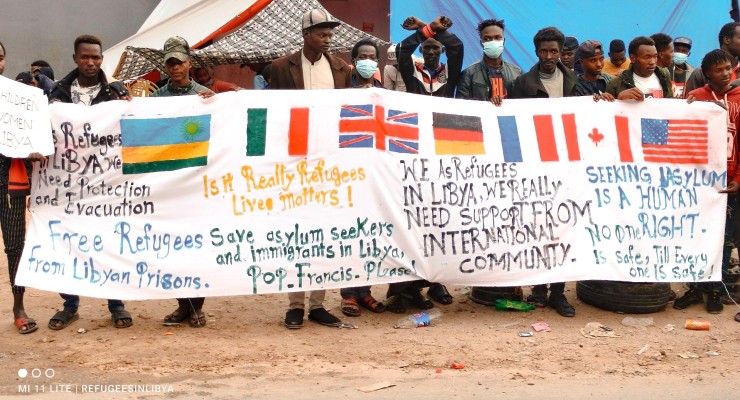
Refugees and migrants demonstrated in front of the UNHCR office in the Libyan capital Tripoli for 100 days in 2021: an important reminder of the EU’s human rights obligations in the current political climate. © Refugees in Libya

Upholding human rights at the border

Even in challenging times, successes in the fight for human rights are being won. In a case against Germany, the European Court of Human Rights recently ruled that the practice of “automatic removal” at European internal borders is unlawful. This confirms at the highest level that the rights of people seeking protection cannot be undermined by deals between heads of state, nor do these rights end at Germany's borders. Our Border Justice team stressed these claims in a statement to the court in support of the plaintiff.


Meanwhile, increasing contempt of the law and rights of people on the move by those in power is the order of the day. By continuing to demand automatic removals at German borders or other blatantly unlawful restrictions on freedom of movement, democratically elected officeholders, regardless of party, are doing the business of fascists. They insinuate that there are people whose rights have less value and situations in which the executive branch is allowed to override the law.


This undercutting of democracy is also evident at the EU Commission, which has been entering into agreements with North African states for years, in complete disregard of both parliament and human rights. Such agreements lead to people drowning in the Mediterranean, dying of thirst in the Tunisian desert or being enslaved in Libya – crimes against humanity committed in the name of border security, in which EU institutions are in many ways involved. We submitted evidence of this involvement, along with the names of suspects, to the International Criminal Court (ICC) as early as 2022. With our partners, we will continue the fight to hold them accountable – a fight emboldened by the numerous participants and experts at our recent event “From Tripoli to Berlin.”


Read our statement to the court


More about the case


Watch the "From Tripoli to Berlin" footage 

BUSINESS AND HUMAN RIGHTS

Lafarge is accused of making deals with the so-called Islamic State and other armed groups to keep their Syrian factory open during the civil war – to the tune of at least 13 million euros. © Sherpa

Multinational Lafarge and former execs will finally stand trial

French judges recently ordered Lafarge SA and four former executives to stand trial before the French criminal court for financing a terrorist organization and violating an embargo. After eight years of proceedings in this case, ECCHR and its partner Sherpa welcome this significant development. But we shouldn’t let the upcoming trial take the spotlight away from an important part of the case. Lafarge is also facing charges of involvement in crimes against humanity as part of a separate but ongoing investigation. The company financed armed groups in northeastern Syria, including the so-called Islamic State, to keep its cement factory running during the Syrian civil war. This not only put their Syrian workers in danger but also raises questions about their complicity in the terrible acts committed by these groups.


More about the case

Major success for complainants under the German Supply Chain Act

Almost exactly a year ago, the Ecuadorian trade union ASTAC, together with its supporters Oxfam, ECCHR and Misereor, filed a complaint against the supermarket chains Rewe and Edeka for labor rights violations and the suppression of trade union rights on banana plantations in Ecuador. The German export authority BAFA has now finally recognized the Ecuadorian union ASTAC as a full-fledged party to the proceedings and granted them access to the case files. According to ASTAC’s Jorge Acosta: “This is an important first success for us, because until now the procedure at BAFA was like a black box…We had no say in what measures were taken to protect our rights.” This recognition of ASTAC also has an impact on other complaints under the Supply Chain Act: in the future, all affected parties who submit a complaint must be involved in the proceedings and have access to the case files.


More about the case

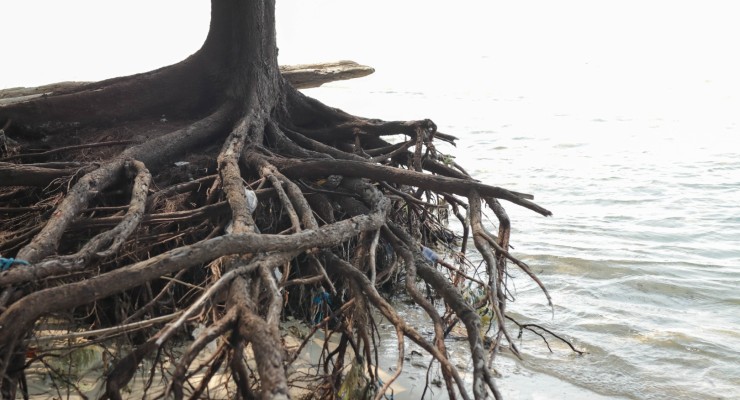
Beach soil erosion, particularly serious on Star Beach where the plaintiff Pa Arif lives, is causing trees to collapse. © WAHLI

Travel report – Pari Island’s mounting ecological challenges

In October, ECCHR’s Laura Duarte-Reyes and Theresa Mockel traveled to Pari Island, Indonesia, to meet with our partner WAHLI and the plaintiffs in the climate lawsuit against the Swiss cement firm Holcim. Two years after the case was filed, market leader Holcim continues to reap massive profits from the sale of CO2-intensive cement, while conditions on the island have further deteriorated. Beyond assessing the situation on Pari, the trip also aimed to support WALHI's advocacy efforts to influence the ongoing legislative process for a Climate Change Bill.


Climate change is existential for Pari residents and particularly for the four plaintiffs, Asmania, Edi, Bobby and Arif. Due to rising sea levels, the island has lost significant land mass to more frequent storm surges and flooding over the years. The trip revealed even more drastic degradation of the island’s ecosystems, affecting the livelihoods of community members on two fronts in particular: food sovereignty and beach erosion. Fish stocks have depleted significantly, compromising one of the island’s staple food sources and a cornerstone of its local economy. The community's fish farm has been hit hard, with massive fish die-offs due to high water temperatures. The food crisis is also evident in the women’s community garden, as hot water temperatures have caused crops to wither. On another front, erosion has worsened to the extent that some beaches have receded more than eight meters. Trees are collapsing due to the loss of soil, as the roots cannot hold.


Despite the colliding crises on the island, the Pari community remains organized and committed to the fight for the survival of their home.


More about the case

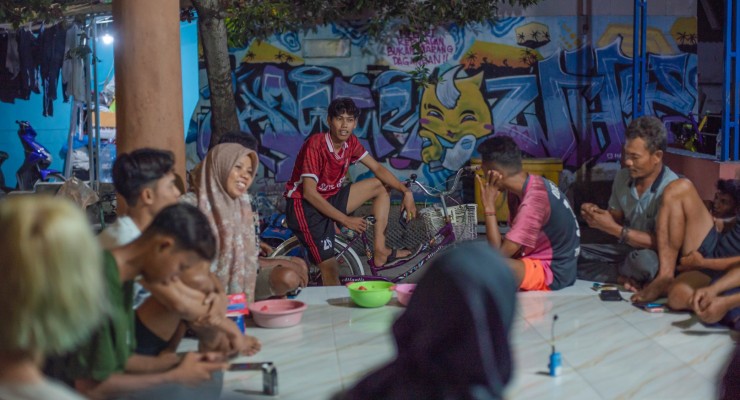
Pari community listens to young people express their concerns about the effects of climate change on the island. © WAHLI

SHRINKING SPACES

We support public debate: Resolution to protect Jewish life in Germany must be reformulated

Together with the CDU/CSU, the ruling party coalition aims to pass a resolution to protect Jewish life in Germany. However upstanding the intention behind this is, we joined over 2,000 people from the fields of culture, academia and the arts in criticizing the way it was drafted and formulated. The text radiates the ominous spirit of censorship, stigmatization and legal persecution of those who take a critical stance toward the current policies of the Israeli government. Our General Secretary Wolfgang Kaleck supports the broad civil society initiative for alternatives to the resolution.

INTERNATIONAL CRIMES AND ACCOUNTABILITY

Iranian regime executes the German-Iranian Jamshid Sharmahd

On 28 October, the German-Iranian and regime critic Jamshid Sharmahd was executed by the Iranian regime. This devastating news shows once again how ruthlessly the Iranian regime treats opposition, freedom of expression, and human rights. Sharmahd, a German citizen, was abducted by the Iranian secret service in Dubai on 28 July 2020 and then brought to Iran via Oman. For three years, he was held in solitary confinement in a secret location without due process, where he was severely physically abused. Then, after a mock trial, he was sentenced to death. With ECCHR’s support, his daughter Gazelle Sharmahd filed a criminal complaint in June 2023 with the German Federal Public Prosecutor (GBA) against eight high-ranking members of the Iranian judiciary and the intelligence service. ECCHR will continue to pursue legal action with full force, in order to persuade the Public Prosecutor to open investigations into the crimes of the Iranian state.


More about the case

AI, surveillance and human rights – Accountability in a new age of warfare

How does the rise of AI in warfare challenge human rights? What are the risks of AI-driven “target generation” tools that rely on vast data troves collected long before conflicts erupt, often with support from major tech companies? As the future of warfare increasingly merges human and machine actors, there’s an urgent need to address potential violations of international humanitarian law and establish accountability frameworks to govern these emerging technologies. These pressing questions were at the center of recent conferences, “Contestations.AI” in Helsinki, and “AI and Warfare” in Berlin, where ECCHR's Andreas Schüller and Tanvi Tuhina presented.


Watch footage of the Contestations.AI conference

ECCHR continues to challenge German arms exports to Israel  

To stop German arms exports to Israel for use in Gaza, ECCHR has pushed for transparency in export licensing. And recently, some transparency was provided by Chancellor Olaf Scholz himself. At parliament, he declared that Germany would continue to allow such arms exports to Israel, despite the risk of them being used to commit war crimes. In response, we and our Palestinian partners filed an objection with the Federal Ministry of Economics and Climate Protection (BMWK) and a renewed request for provisional measures with the Frankfurt Administrative Court, on behalf of a plaintiff in the Gaza Strip. These legal actions signal our commitment to uphold Germany's international legal obligations. Despite the ongoing conflict, our legal efforts are making an impact, prompting the German government to seek assurances from Israel that exported weapons will comply with international law. This shows that, contrary to its public mantra, the German government fears such violations may occur. These assurances, however, may offer little protection for civilians in Gaza, which is why we continue to demand that Germany stops exporting arms to Israel. 


For more insight into our work on the Gaza conflict, read our Supporter Newsletter

More about our work on Gaza and on arms exports

© CRIN

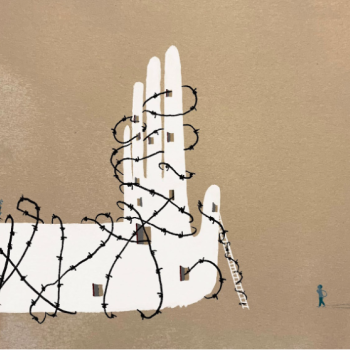
Combating illegal border practices

For over a decade, we have been committed to exposing and challenging illegal border practices. And we won’t stop. Your donation will help to ensure that crimes and human rights abuses committed in the name of European border security are exposed and prosecuted.

Donate now

BORDER JUSTICE

Assessing the intrinsic unlawfulness of pushbacks

The European Court of Human Rights recently relinquished a number of cases to its Grand Chamber. This exceptional move indicates that it intends to issue landmark decisions. One case concerns the pushback of four Cuban nationals from Lithuania into Belarus in the spring of 2022. During this period, Lithuania had announced a state of emergency and subjected asylum seekers either to mass pushbacks or automatic detention. ECCHR entered the proceedings by submitting a third-party intervention, providing the court with an assessment of international and European legal human rights standards, relying on reports by human rights bodies and establishing that pushbacks can never be lawful. 


More about the case

INSTITUTE FOR LEGAL INTERVENTION

Forensic Architecture wins alternative Nobel Prize

Forensic Architecture, our partner in the Investigative Commons collaboration, recently won the Right Livelihood award (aka. alternative Nobel Prize) for its pioneering work to expose environmental and human rights violations using cutting-edge open-source and digital modeling techniques. We applaud this recognition of their innovative work toward ensuring justice and accountability in the global struggle for human rights.


More info

Book launch: The Justice of Humans

Justice for conflict-related sexual violence remains a critical problem for global society today. This groundbreaking book addresses pressing questions about international justice: What do existing approaches to international justice offer to victims of war and societies in conflict? And what possibilities do they provide for feminist social transformation? At the ECCHR office, the author Professor Kirsten Campbell (Goldsmiths University) gave a short presentation on the book, which was followed by a panel discussion with Dr. Monika Hauser (medica mondiale) and Dr. Kalika Mehta (Humboldt University), moderated by Dr. Annelen Micus (ECCHR).


More info

ECCHR

Job opening at ECCHR

ECCHR is looking for a legal advisor to join our Border Justice team. 


More info

We welcome new staff and trainees

Maria Cristina Hernandez Hurtado joined the Business and Human Rights team as Senior Legal Advisor


Lilian Löwenbrück joined the International Crimes and Accountability team as Legal Advisor


Eric Belgorodski joined the International Crimes and Accountability team as a trainee


Marie Mehaudens joined the Business and Human Rights team as a trainee


Melina Riemer joined the Border Justice team as a trainee


Nils Herpich joined the Media and Communications team as a trainee


Lisa Lou Cornet joined the Institute for Legal Intervention as a trainee

FOR GLOBAL JUSTICE

The world can only be just when human rights are universally recognized and guaranteed for everyone. This is what we are fighting for across the globe:
with those affected, with partners, with legal means.
Thank you for helping us in our efforts to make this happen.

Donate now

EVENTS

On Justice #1: The Promise of International Law

Can a pluralistic society be defended by relying more strongly on universal equality before the law? What would laws of the future look like in the context of climate catastrophe, sexual violence, increasing militarization, and growing social divisions? ECCHR’s Andreas Schüller joins Kristina Hatas, Dr. Nahed Samour, Prof. Dr. Matthias Goldmann for a panel discussion moderated by Armaghan Naghipour.


7 November, 7:00 pm, HAU1 Hebbel am Ufer, Stresemannstr. 29, Berlin


More info

Understanding Prison: MENA Prison Reform in Berlin

To counter the oppressive soundscape in the cells of the notorious Sednaya prison in Syria, a group of political prisoners founded a music group there 30 years ago. They built their instruments from leftover food, clothing threads and other prison materials. Now they will play their songs live. Afterwards, ECCHR’s Joumana Seif joins Yassan Al Haj Saleh and Lynn Maalouf for a panel discussion, moderated by Bente Scheller, on the long history of imprisonment, torture and human rights crimes in Syria.


27 November, 7:00pm, HAU1 Hebbel am Ufer, Stresemannstr. 29, Berlin


More info

Panel Discussion: Two years of the German Supply Chain Act

Inadequate payment of truck drivers, forced labor in Xinjiang, violations of workers' rights on banana plantations in Ecuador, disregard for the land rights of indigenous communities in Guatemala, and suppression of trade union work and low wages in textile factories in Pakistan – what do these all have in common? All of these problems occur within the supply chains of German companies. The German Supply Chain Act has been in force for almost two years – join us for this panel discussion to take stock of the law’s successes and failures. 


13 November, 5:30 pm, tak Theater Aufbau Kreuzberg, Prinzenstr 85F, Berlin 


More info

PAST EVENTS

Visions of a different globality: Symposium on the 20th anniversary of the medico foundation

The recent electoral successes of the right-wing point to a diffuse “unease with globalization,” as well as anxieties about what could come in its wake. This symposium looked instead at approaches to a different kind of globalization, not based on individual gain, but on social balance and diversity across different localities.


Watch the footage


Criminal justice in the Syrian conflict: A model for addressing the war in Ukraine?

Criminal justice in the Syrian conflict: A model for addressing the war in Ukraine?

At the Memorium Nürnberger Prozesse, ECCHR’s Patrick Kroker gave a lecture on how the experiences of prosecuting Syrian crimes in Germany under universal jurisdiction may provide a roadmap for justice regarding crimes in the war against Ukraine.


More info


Symposium: After Memory 

This symposium looked at how memory is affected by endless social media feeds, automated data storage, and networked communication technologies. ECCHR’s Elisabeth Krämer gave a presentation on ECCHR’s Living Open Archive as a collaborative platform and repository of knowledge.


More info


European Parliament: Subcommittee on human rights

ECCHR’s Florentina Pircher presented the work of the Global Initiative Against Impunity at the European Parliament last month, emphasizing how EU member states must do everything in their power to support international criminal justice institutions like the ICC.


Watch the footage


From Tripoli to Berlin

Illegal push- and pull-backs, arbitrary detention, enslavement, sexual violence, and deaths at sea and on land: these are just some of the serious crimes and human rights violations people on the move face in Libya, Tunisia and the Mediterranean. And EU migration policies directly contribute to them. With input from RiL, a German Member of Parliament, ECCHR and the Civil Fleet, this event explored possibilities and challenges for political, legal and practical interventions.


Watch the footage

PUBLICATIONS

Andreas Schüller
Interview: Right to self-defense is not without restrictions (only available in German) 

taz, 29 October 2024


Chantal Meloni 
Universal Justice? States and the International Criminal Court: Assessment of a Pledge (Only available in Italian)

Il Mulino, 2024


Shastikk Kumaran
The ICJ’s Treatment of Questions of Occupation in Gaza

Verfassungsblog, 12 October 2024

RADIO/PODCAST/VIDEO

Hanaa Hakiki

Fortressing of borders or integration? (TUD Lectures+)

You Ask We Explain, October 2024


Alexander Schwarz

Frontal: German government criticized – Unconditionally on Israel's side? (Only available in German)

ZDF, 15 October 2024

Let's stay in touch!

+49 (0)30 69506023          newsletter@ecchr.eu

ECCHR

EUROPEAN CENTER FOR CONSTITUTIONAL AND HUMAN RIGHTS
Zossener Straße 55 – 58
D – 10961 Berlin

+ 49 30 400 485 90
info@ecchr.eu

If you no longer wish to receive this email, you can unsubscribe here. 

twitter facebook instagram linkedin youtube

Bank details
Name: ECCHR
Bank: Berliner Volksbank
IBAN: DE77 100 90000 885360 7011
BIC: BEVODEBB

Further information on data protection and imprint.